

Get into the groove with manage+: How to easily track and organize your portfolio’s ESG performance

For asset managers, tracking sustainability performance in portfolio companies is complex. manage+ simplifies the process.

Asset managers are increasingly under pressure from investors, regulators and other stakeholders to disclose information about the environmental, social and governance (ESG) performance in their portfolios. In response, many managers need to shape up their processes for tracking and organizing ESG performance in their portfolio companies.

But this requires aligning with a complex mesh of sustainability frameworks and standards. So many asset managers are desperately seeking something that helps them more easily track and manage sustainability reporting. But they can relax – a one-click ESG reporting solution is at hand, and it’s called manage+.

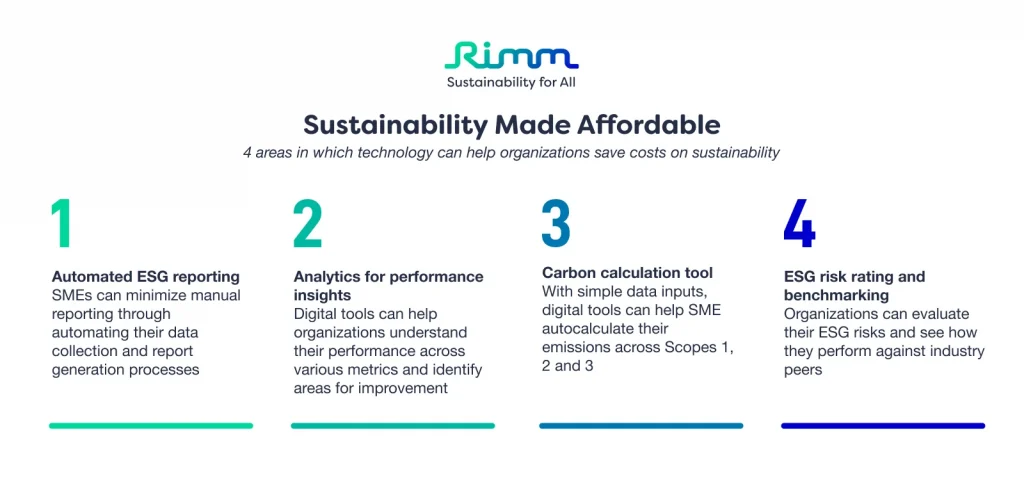
4 ways to improve ESG data management and reporting

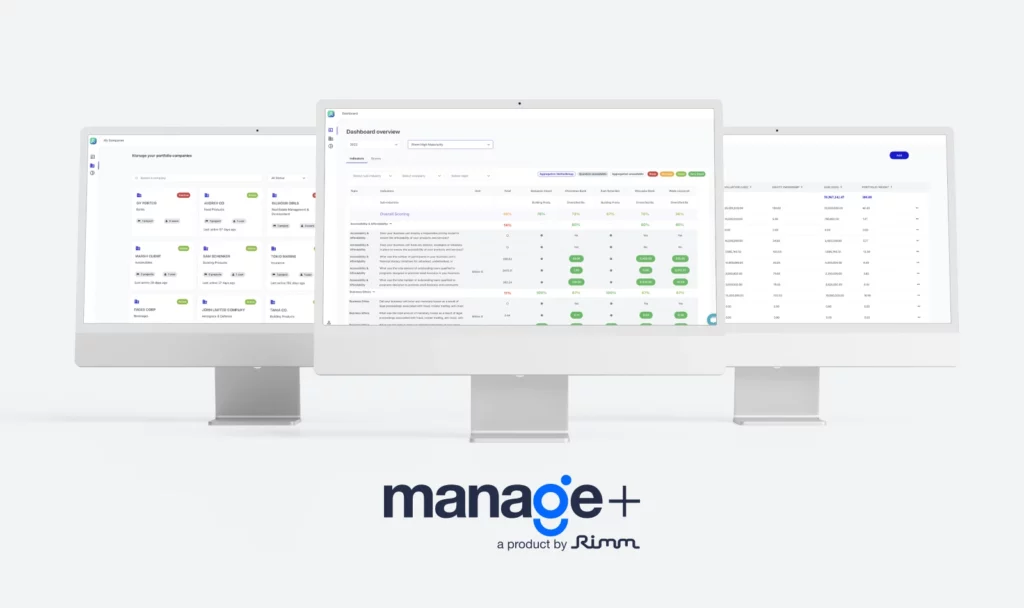
manage+ helps asset and fund managers reduce the time, cost and resources they spend on ESG data management and reporting across their portfolios. manage+ provides a bird’s eye view of your portfolio sustainability performance, helping you track it seamlessly from one dashboard; boost communication with your portfolio companies; and generate your portfolio’s aggregated metrics in one click.

Here is more detail about the four key ways manage+ helps asset managers.

1. Comply with global sustainability standards and frameworks

manage+ enables you align with frameworks relevant to your company, such as Task Force on Climate-related Financial Disclosures (TCFD); Sustainable Finance Disclosure Regulation (SFDR); Institutional Limited Partners Association (ILPA); Global Reporting Initiative (GRI); Sustainable Accounting Standards Board (SASB); and ESG Data Convergence Initiative (EDCI).

Asset managers invite their portfolio companies to input their details and create a myCSO account, including information about their industry and sub-industry. myCSO then automatically generates assessments tailored to material topics for each company.

This aligns companies with the relevant international standards and frameworks to make compliance and reporting hassle-free for them and the asset manager.


2. Auto-populate your ESG data to any LP or regulatory template

manage+ integrates a natural language processing (NLP)-driven tool that enables precise auto-population of the asset manager’s ESG data into any LP or regulatory template. 

This eases reporting; significantly streamlines data collection and reporting processes; and saves time and effort for your fund managers and regulatory compliance teams.

3. Easily manage and analyze your portfolio’s ESG performance in one place

Get a holistic overview of your portfolio’s ESG and sustainability performance across industries on one portfolio dashboard. This includes an overall ESG score that also breaks down to show how well each company performed on various ESG topics and indicators.

Once companies have submitted their assessments, myCSO will auto-generate a performance dashboard and reports analyzing their ESG performance.

This analysis helps you identify and target areas of weakness to work on and improve sustainable impact and value across your portfolio.

4. Benchmark and compare ESG performance and track KPIs

The dashboard shows how well each company performed on common indicators against its peers of the same or similar industry, region and size.

This enables asset managers to analyze and benchmark performance, track key performance indicators and extract insightful data that benefit you and your portfolio.

Want to learn more about manage+?

Book a demo and start managing your portfolio companies’ ESG with ease today.

Simplify Your Sustainability Performance & Tracking With myCSO

✅ Calculate your scope 1, 2 and 3 emissions instantly

✅ Gauge your company’s sustainability performance

✅ View your sustainability performance all from one dashboard

Benchmark against industry peers

Enter your information below to book a demo with our team today.

Asset Managers Must Catch Up with Client ESG Needs, or Be Left Behind

Asset managers have an opportunity to strengthen their ESG propositions to improve performance, risk management, sustainability, and recruitment.

Asset managers have a major opportunity to better align their sustainable investment practices, products and reporting with investor expectations globally. That’s the verdict of two recent reports from credible sources.

The first is a 2023 Deloitte survey, which concluded that, in a highly competitive market, ESG investing offers asset managers a significant opportunity for organic growth. But they have to meet investors’ needs for transparency and well-defined causes.

The second is the latest Sustainable Signals survey from the Morgan Stanley Institute for Sustainable Investing. This highlighted several areas where asset managers have an opportunity to meet growing sustainable investing interest and demand from asset owners; and better differentiate in a maturing market.

Our experience at Rimm is that there are significant gaps in ESG data at many companies, which impede their ability to provide the transparency investors need. There is an increasing focus for asset managers to manage their portfolios and drive disclosures in alignment with Institutional Limited Partners Association (ILPA) principles, Task Force on Climate-Related Financial Disclosures (TCFD), the Sustainable Finance Disclosure Regulation (SFDR) and other reporting standards and frameworks.

If asset managers can bridge these gaps, they could boost growth opportunities significantly. Conversely, those who fail to meet these challenges risk losing valuable clients, and underperforming in the long run.

Let’s explore in more detail how and why asset managers need to strengthen their ESG propositions.

ESG improves long-term returns

The vast majority of asset managers believe ESG strategies will improve returns. And many say using ESG strategies has already yielded higher performance. We also know that the majority of investors say they would pay higher fees for this performance premium.

There is an increasing body of independent evidence to support these claims of outperformance.

For example, a 2023 study from MSCI showed that the ESG factor consistently posted positive or neutral performance across sectors and this effect gets clearer over longer periods.

Other studies have shown ESG-prioritized companies have higher returns, especially over longer periods, thanks to factors such as improved risk management and greater innovation. Some suggest that companies with strong ESG profiles are less vulnerable to disruption from regulatory or market changes, thus lowering costs of capital and buoying share prices.

By the way, some asset managers are currently finding investment returns hard to come by in the economic downturn. But with many companies driving new innovations in ESG, as highlighted in 2023 research by the World Business Council for Sustainable Development, these dynamic firms could prove a valuable hunting ground for outperformance.

Demand keeps growing

Despite uncertain economics, demand for ESG and impact investing continues to grow. PwC predicts that between 2021 and 2026, global ESG investment will more than double to $33 trillion – much faster than the wider asset and wealth management market.

At Rimm, we know investors are increasing their attention on ESG areas such as data security and privacy, corporate governance and reducing greenhouse gas emissions.

Most asset managers already implement or plan to implement sustainable investing in response. But, in this competitive market, any asset managers with weaker ESG options risk losing clients to stronger competitors, and missing growth opportunities.

It’s a future-proofer

Integrating ESG factors can help asset managers manage long-term risks and ensure sustainability. A strong ESG proposition helps you identify firms that can benefit from long-term ESG trends. But it also enables you to screen out companies whose long-term performance may be damaged by ESG risks, thus future-proofing your portfolios.

Alternatively, if you engage actively with such companies, you can also encourage them to follow more ESG-related practices. This helps further reduce risk and support long-term performance.

Win the talent war

Sustainability and social responsibility are increasingly important for younger employees, and they are more likely to choose employers that reflect their values.

From talking to clients, we know a strong ESG proposition can help asset managers get ahead in the talent war by attracting and retaining valuable staff. With talent shortages reaching critical levels in 2023, this is more important than ever. Conversely, a weak ESG strategy can create a social stigma and cause companies to lose key workers or face a restricted talent pool.

In conclusion, asset managers need to focus on strengthening their ESG proposition for multiple reasons, including the impact on investment returns; growing demand for sustainable investing; better risk management; ensuring long-term sustainability; and attracting and retaining talent. This shows why developing a strong ESG proposition is not just right, but smart – a great business decision that can benefit asset managers and their clients long-term.

manage+ can help you bridge data gaps and manage your portfolio companies’ ESG performance in alignment with major global standards, including ILPA, TCFD, SFDR and more. Book a demo to learn more today.

Simplify Your Sustainability Performance & Tracking With myCSO

✅ Calculate your scope 1, 2 and 3 emissions instantly

✅ Gauge your company’s sustainability performance

✅ View your sustainability performance all from one dashboard

Benchmark against industry peers

Enter your information below to book a demo with our team today.

5 Sustainability Standards and Frameworks You Should Know About in 2023

With the ever evolving ESG reporting and regulatory scene, it can be difficult to keep up with key developments. Let’s look at 5 up and coming standards that will impact your business.

Sustainability reporting is becoming an integral part of business operations. For many companies, this trend goes beyond brand positioning and making a positive impact, affecting their regulatory compliance, financial statements, and funding from investors. With more complex and comprehensive sustainability disclosure requirements being introduced, navigating the sustainability reporting scene can be daunting, but remains key.

Here’s an overview of some of the important new standards and frameworks to keep on your radar in 2023.

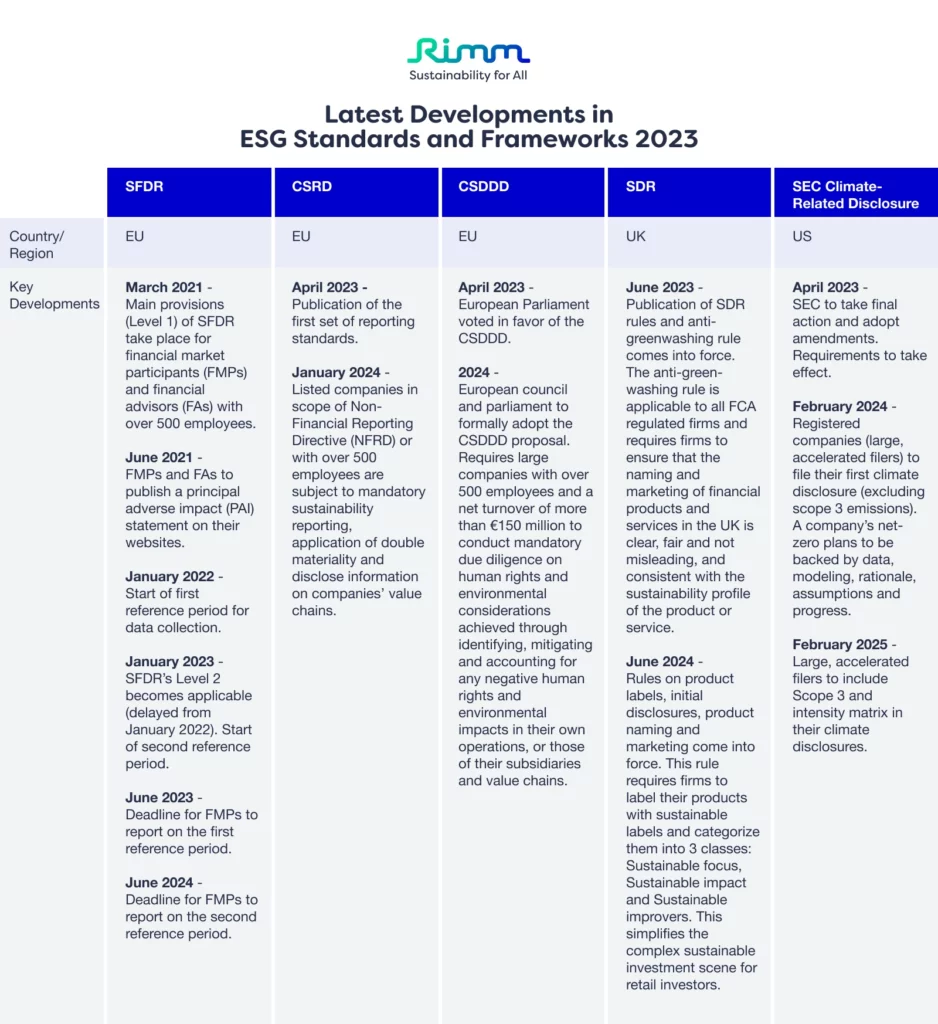
1. Sustainable Finance Disclosure Regulation (SFDR)

The SFDR was proposed by the European Commission in 2019 and aims to promote sustainable finance and minimize greenwashing in the EU. The regulation requires financial market participants (FMPs) and financial advisers (FAs) to provide greater transparency around the sustainability of their investments and is divided into three levels of disclosure requirements: (Level 1) mandatory disclosure of sustainability policies by FMPs and FAs, (Level 2) detailed information on the environmental, social, and governance (ESG) characteristics of investments and how these are incorporated into the investment decision-making process, and (Level 3) mandatory disclosure of the impact of investments on sustainability.

2. Corporate Sustainability Reporting Directive (CSRD)

The European Commission has developed the CSRD framework to strengthen and standardize sustainability reporting for businesses operating in the EU. With its goal of offering stakeholders a thorough and consistent system of sustainability reporting to make decisions that will promote sustainable growth, the CSRD expands reporting requirements to all major corporations and companies listed on EU regulated markets, replacing the current Non-Financial Reporting Directive (NFRD). This initiative is estimated to affect over 50,000 European companies and over 10,000 foreign companies, which would bolster a new degree of confidence for sustainability reporting.

3. Corporate Sustainability Due Diligence Directive (CSDDD)

Proposed by the European Commission in February 2022, the CSDDD aims to hold businesses accountable for their impacts on the environment and society. With the overarching aim to make Europe climate neutral by 2050, the directive is currently in the feedback stage and is projected to impact approximately 13,000 EU and 4,000 non-EU companies once implemented in 2024. In order to comply with CSDDD, organizations must detect, prevent, mitigate, and account for any potential negative effects of their activities and supply chains on the environment, human rights and social issues. This has a ripple effect on SMEs that are involved in the supply chains of many of the affected larger companies as they may need to disclose information and minimize their own risks.

4. Sustainable Disclosure Regulation (SDR)

The UK Financial Conduct Authority (FCA) has also come up with their own measures targeting investment firms and distributors of in-scope investment products to combat greenwashing in the investment scene. The SDR incorporates the TCFD recommendations and double materiality. Some of the requirements of the SDR include three sustainable investment labels for retail investors to navigate the complex sustainable investment scene and more in-depth sustainability disclosures at the product (consumer, more general) and entity (stakeholders, more granular) level. While this measure is still in the early stages of implementation, it will have a significant impact; the FCA estimates that the SDR will affect about 450 funds managing £10.6 trillion in assets.

5. Climate-Related Disclosure Rule

In the US, the Securities and Exchange Commission (SEC) has proposed a new rule in 2022 requiring registered domestic and foreign companies to disclose information on climate-related metrics by February 2024. Under the new regulations, companies will be required to provide information on the physical and transition climate risks and impacts, governance practices around risks and risk management, mitigation plans, Scope 1 and 2 emissions, Scope 3 emission if material or a target has been set, and climate-related financial metrics in a note to audited financial statements. Building on the TCFD framework, these regulations aim to help businesses disclose climate risks and opportunities and standardize information for investors.

With the increasingly stringent and comprehensive regulations set to take place, organizations need to keep up with mandatory requirements under the new frameworks and standards for sustainability reporting and disclosure to be ready for compliance. Awareness, followed by appropriate planning, is key to mitigating the potential negative effects on your business and society.

Want to know what to include in your sustainability report?

Read our previous post on ‘What to Include in Your Sustainability Report

Simplify Your Sustainability Performance & Tracking With myCSO

✅ Calculate your scope 1, 2 and 3 emissions instantly

✅ Gauge your company’s sustainability performance

✅ View your sustainability performance all from one dashboard

Benchmark against industry peers

Enter your information below to book a demo with our team today.

Rimm Supports in RFI x HSBC Fintech Program

Rimm collaborates with RFI to lead the sustainability module at their Global Virtual Innovation Hub (GVI) FinTech Program for startups and SMEs.

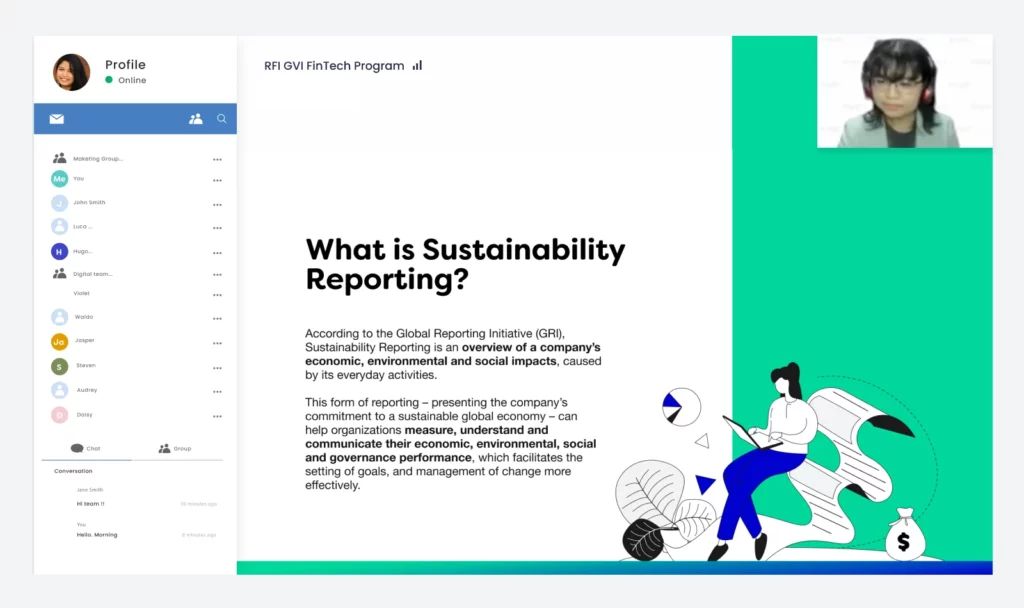
In early February, Rimm was invited to facilitate the Sustainability Module in the Global Virtual Innovation Hub (GVI) FinTech Program organized by the Responsible Finance & Investment (RFI) Foundation in collaboration with HSBC. With participants from around the world, the 10-week program sought to develop FinTech SMEs and startups’ capacities in responsible finance and sustainability, with a focus on the Middle East and North Africa (MENA) region.

The session marked our third collaboration with RFI’s GVI FinTech program, ever since the first iteration in October 2021. Shaleen Shahrin (Sustainability Expert and Strategic Partnerships, Rimm) began with the orientation, where participants were briefed on what to expect from the program over the subsequent days.

“It was great to share Rimm’s sustainability insights with another cohort of RFI’s GVI FinTech program. It is important for FinTechs to understand what sustainability means for their organization, and how they can incorporate sustainability into their business strategy,” shares Shaleen.

We led an ‘Introduction to Sustainability’ session, which focused on the rising presence of sustainability and reporting in the world of small and medium enterprises (SMEs). The interactive session shed light on some key trends driving ESG and sustainability engagement based on our ESG research. We covered various ESG frameworks, materiality and complementary strategies to enhance sustainability reporting, focusing on topics most relevant to the audience.

At Rimm, we believe in helping organizations implement sustainability right. Our program debunked some common myths around sustainability, challenges and solutions to reporting and the long-term risks of greenwashing. One of the topics covered was ‘ESG 2.0’, a new approach to ESG that steers away from minimalist ESG measures that merely satisfy internal and external requirements. It recognizes the importance of embedding ESG policies and frameworks into organizations’ operations and calls for impactful strategies to implement ESG right.

We also led a hands-on practical session, involving a demo of Rimm’s myCSO platform, to demonstrate the capabilities of myCSO in streamlining sustainability management and reporting for SMEs. We were happy to provide free trials of myCSO Essential for the program participants to explore and assess their own sustainability performance and potential for improvement. Rimm also conducted a carbon calculation exercise wherein program participants were able to calculate their Scope 1, 2 and 3 emissions intensities through our platform’s Carbon Calculator feature.

Our engagement with RFI’s GVI FinTech cohort concluded on a successful note as we received the opportunity to share our sustainability insights and capabilities with yet another group of SMEs. We hope to continue engaging with like-minded organizations and individuals in the future with our end goal to democratize sustainability for all.

Looking to automate and simplify sustainability reporting for your organization?

Speak with our team to learn more about our solutions!

Simplify Your Sustainability Performance & Tracking With myCSO

✅ Calculate your scope 1, 2 and 3 emissions instantly

✅ Gauge your company’s sustainability performance

✅ View your sustainability performance all from one dashboard

Benchmark against industry peers

Enter your information below to book a demo with our team today.
Addressing the Drawbacks and Limitations of ESG Ratings

There is a wide range of ESG ratings systems available with inconsistent results on ESG scores for different companies. Hear Ravi Chidambaram (CEO, Rimm) on navigating this challenge.

ESG ratings provided by firms like MSCI and Refinitiv have come under increasing scrutiny by corporations, regulators and investors. These companies have been criticized for using opaque, inconsistent methodologies in developing ratings, making it difficult for practitioners to compare ratings between providers or predict ESG-risk outcomes.

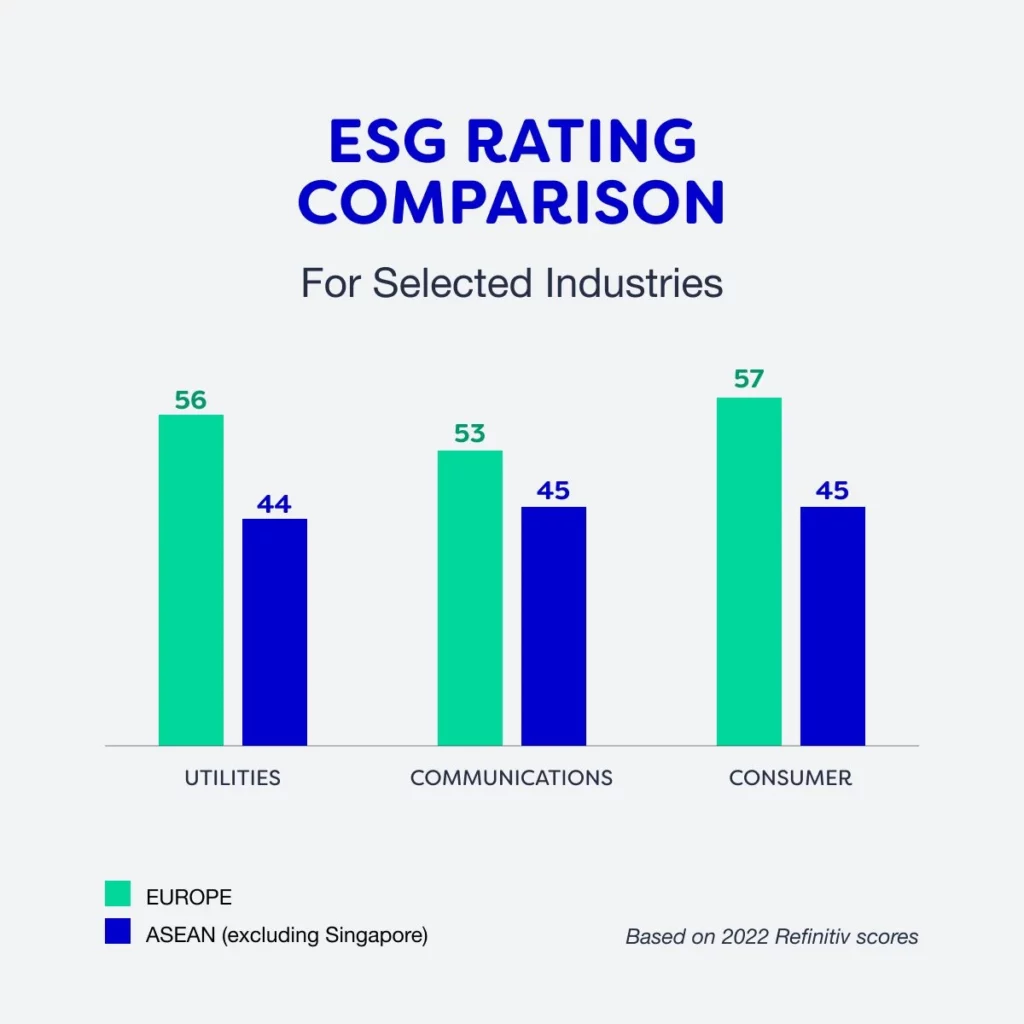
Another overlooked shortcoming amongst current major ratings providers is their “one size fits all” ratings system. In this model, virtually the same criteria are used to judge the ESG performance of a company from the United States or Europe with a similar company in the same industry in an emerging market. As the chart below shows, average ratings for emerging markets companies are often lower than companies from the West.

A recent academic paper by Professors Jeff Chen, Zenquan Li, Ting Mao and Aaron Yoon (“Global vs. Local ESG Ratings: Evidence From China”) demonstrates that local ESG ratings were much better than global ratings for predicting how ESG risks can materialize in Chinese companies. This was particularly the case in predicting social and governance risks in areas like corruption, legal violations and employment conditions. The authors conclude that the main reason for this is that local raters had a much better appreciation of the “contextual” nature of ESG risks in China.

ESG is a function of the local cultural, social, political and regulatory environment and varies greatly between countries and regions. For example, many Asian businesses are family-owned with multiple, related party transactions between different family entities. In Western corporate governance, this would normally be a red flag, but if managed responsibly, the risk posed by such related party deals may be benign. In a similar vein, a Nigerian or an Indonesian bank may be unfairly penalized for having greater lending exposure to fossil fuels than a Western bank though those countries derive the majority of their GDP from fossil fuels.

At Rimm, we see a clear demand from our clients in emerging markets for a more localized and contextualized ESG rating model. These companies want a more nuanced rating to better understand performance in the context of the local environment to set more realistic sustainability goals and targets. Local ESG ratings can also drive domestic, green capital markets growth as local investors are better able to price risk and opportunity within a local framework. We have already started developing a local ESG rating system for Indonesia and expect to trial it there soon.

Want to learn more about Rimm’s sustainability and ESG solutions?

Speak with our team to learn more about our ESG solutions.

Ravi Chidambaram
CEO – Founder

A strong believer in ethical, purpose-driven, and environmental-focused principles, Ravi Chidambaram has brought much value to the community through his knowledge and expertise. He shares his insight as a Professor of Sustainability at Yale-NUS and as a global commentator on sustainability issues. Now a serial entrepreneur, he is currently working on his 4th start up. It was there where he realized the need for sustainability that is both accessible and actionable, resulting in the creation of Rimm.

Simplify Your Sustainability Performance & Tracking With myCSO

✅ Calculate your scope 1, 2 and 3 emissions instantly

✅ Gauge your company’s sustainability performance

✅ View your sustainability performance all from one dashboard

Benchmark against industry peers

Enter your information below to book a demo with our team today.

Digitalization as an Enabler for ESG Compliance

The incorporation of technology is taking the corporate world by storm. Let’s find out how it is influencing the ESG scene.

As environmental, social and governance (ESG) factors are becoming increasingly important considerations for investors and companies alike, the intersection of digitalization and ESG has become a hot topic in the business world.

The shifting demands of consumers and investors for greater transparency and accountability has led to a growing number of regulations and frameworks – such as the International Financial Reporting Standards (IFRS) developed by the International Sustainability Standards Board (ISSB) – being adopted and mainstreamed over the years. The regulatory push is coming from all angles and levels, including from the international, regional, commercial and industry-specific spheres.

As many of these regulations are or will become mandatory and have penalties for noncompliance, digitalization is a necessary step in automating, accelerating and scaling processes around emissions reductions, data management and auditing to keep up with the ever evolving regulatory requirements.

We are seeing an increased prominence of a technological race between regulations and ESG efforts, where digitalization is becoming an indispensable enabler for companies to be ESG compliant.

Technology can help to boost the efficiency of ESG reporting through aiding organizations in collecting, analyzing and benchmarking complex data on materially relevant ESG metrics. This is particularly pertinent in certain industries, such as agriculture, energy, transportation, buildings and real estate.

The problem faced during the process of generating ESG performance analyses and sustainability reports is often related to data collection, data management and the amount of work that needs to be invested into the process. With recent regulatory developments requiring Scope 3 emissions reporting, which encompasses supply chain emissions and has historically been the most challenging to measure of the three scopes, this task would be immensely time-consuming to accomplish manually on an annual basis, especially for larger companies. Digital tools not only enable tracking and analysis of data on a larger scale, but also helps to combat greenwashing through better accounting and verification.

What does this mean for SMEs?

Currently, small and medium-sized enterprises (SMEs) make up 90% of businesses and 50% of the workforce globally, harnessing great potential for positive impact. While it may seem that SMEs are still exempt from many of the regulatory requirements, these changes for multinational corporations (MNCs) have resounding ripple effects. As scope 3 emissions reporting becomes compulsory, companies are pressured to streamline their supply chains, which often comprise SMEs. What we would observe is a trickle-down effect whereby ESG regulations for MNCs would indirectly influence SMEs to adopt better ESG practices.

As digitalization increases the transparency of MNCs’ supply chains, SMEs would be placed under greater scrutiny for their ESG practices. Greenwashing allegations are expected to continue to increase with greater public attention on sustainability and greater pressure to comply with stricter regulations.

Through stakeholder interaction and engagement, MNCs would work with their suppliers to ensure compliance. This could include setting emissions reduction targets, selecting suppliers based on their ESG performance, and implementing sustainable procurement practices.

With available data on companies’ ESG performance, technology also provides predictive capabilities on companies’ performance trends, such as in energy production or consumption. This enables companies to identify risks, opportunities, and areas in which they can improve their operational efficiency.

How can Rimm help?

Rimm offers ESG performance analytics and automated reporting services that provide insight and capacity to help organizations understand and improve their sustainability. Whether big or small, businesses looking to optimize their operational efficiency and financial performance should leverage technology to stay ahead of regulatory requirements and climate risks.

To browse through Rimm’s catalog of sustainability and ESG solutions, click here or contact us for a free demo!

Pedro Baiz

Dr. Baiz has a background in engineering with extensive experience in academia and industry (consultant in data-driven projects with organizations such as Heathrow Airport, HSBC and many more). He has deep knowledge of data technologies (e.g. machine learning, IoT) and digital transformation.

Simplify Your Sustainability Performance & Tracking With myCSO

✅ Calculate your scope 1, 2 and 3 emissions instantly

✅ Gauge your company’s sustainability performance

✅ View your sustainability performance all from one dashboard

Benchmark against industry peers

Enter your information below to book a demo with our team today.

Highlights of Rimm’s Strategy And Bonding Week in Singapore

Rimm’s global team from Singapore, UK, Japan and Portugal gathered in Singapore for one week of strategy and team bonding sessions. Read on to find out about the experience!

Recently, our international teams from the UK, Portugal and Japan flew to Singapore for a productive week of bonding and strategizing for 2023. It was our first time bringing everyone together from our global offices, and we also had the chance to celebrate International Women’s Day with all the amazing women on our team.

To kick-off the week, we ran numerous strategy sessions with everyone to align our vision and goals for the year. Each department came together to discuss their goals, refine strategies and approaches, and share their plans with the rest of the team.

“The strategy sessions were a fantastic way to collaborate and share ideas! It was super informative and insightful to understand the goals and agenda for each team for the next year,” says Riya Sharma, Partnerships Manager in Rimm’s London office.

As we are currently in a very important stage in our growth, aligning our strategies is crucial in improving transparency and coordination across teams on our various projects and timelines. With 2023 poised to be a very critical year for us as a company, our time together helped to clarify our goals and how we plan to achieve them.

Apart from our strategy sessions, we also had the opportunity to visit a local permaculture farm to learn about sustainable farming practices. As we toured the farm, we explored how they set up self-sustaining irrigation systems and closed ecological systems. Towards the end, we got to relax with food and drinks made from natural ingredients found in the farm.

“It was inspiring to see how the volunteer community builds the organic farm using their expertise and trial and error of natural methods,” shares Wei Ti Goh, our data scientist from the Singapore office.

“Overall it was a great experience. I’ve gotten to know how badly we treat the soil, something we depend on to grow the food we need to survive, and how small and simple sustainable practices can be applied to restoring it,” says Fábio Duarte, our Head of Development based in Portugal.

On our third day, Rimm explored the city on an amazing race around Singapore, centered around Singapore’s areas of heritage and culture.

“The amazing race was a fun and exciting way to explore Singapore! Having never visited before, I really enjoyed getting to know the local areas and understand the heritage behind the different sites. Lots of lessons learnt and lots of team bonding!” says Riya.

We rounded off our strategy and bonding week with a delightful dinner at Barbary Coast, where we looked back on an eventful time together and had one last meal before our overseas colleagues had to catch their flights back home.

It was sad to say goodbye, but I think most of us at Rimm will agree that we had a wonderful time walking the talk and living our brand ethos, ‘Real Impact Matters Most’ (Rimm), as a team. We look forward to our next reunion!

We are currently hiring!

As Rimm continues to grow, we are looking to expand our team. If you are interested to join our team or know anyone who might be suitable, please head over to our LinkedIn Jobs Page.

Simplify Your Sustainability Performance & Tracking With myCSO

✅ Calculate your scope 1, 2 and 3 emissions instantly

✅ Gauge your company’s sustainability performance

✅ View your sustainability performance all from one dashboard

Benchmark against industry peers

Enter your information below to book a demo with our team today.

Rimm Panel Discussion: The Rise of Automation in Sustainability

With the rise of ChatGPT and other AI tools, hear our expert speakers on how automation is shaping the sustainability space and providing solutions to challenges.

On March 16, Rimm held our first hybrid event of the year, “The Rise of Automation in Sustainability”. The event centered around a panel discussion, focusing on how automation can be used by companies to promote sustainability and the associated benefits and challenges. We were honored to have Ravi Chidambaram (Rimm, CEO), Vincent Caldeira (Red Hat, CTO), and Steven Newman (Menicon, CTO) on our panel to share their expertise with Dr. Darian McBain (OCSO, CEO) as our distinguished moderator.

With a multitude of regulations and frameworks increasingly mandating sustainability reporting, it may seem daunting for small businesses to embark on their sustainability journey. Automation enables easy access to sustainability for all companies, including those that may lack the necessary resources and manpower to implement more sustainable practices.

“Reporting to us is really just the starting point. You could get green loans, sustainability certifications, and be supply chain compliant… There are so many use cases around sustainability, and the idea is to go way beyond reporting.” – Ravi Chidambaram

Here’s a brief summary of what our panelists had to share.

Key takeaways:

  • Automation can aid companies in their necessary transition toward sustainability by demystifying and simplifying adoption, helping them overcome logistical and financial hurdles to beat the rising cost of compliance and stay competitive.
  • By starting with sustainability disclosure, companies can get a clearer idea of issues that are material to them, allowing them to identify areas for improvement to implement effective strategies.
  • Beyond reporting, automation can be used for data scraping, benchmarking and auditing, all of which contribute to data verification and combating greenwashing.
  • Although we are still in the early days of automation and sustainability reporting, automation can help to boost the credibility of self-reported data.
  • Some ESG data might be inaccurate due to the lack of verification and lack of standardization between taxonomies.
  • Automation and sustainability can also bring together ESG reporting companies to capitalize on each other’s strengths to come up with better and more holistic solutions for all companies.
  • Sustainability and automation will continue to grow as a key topic area as businesses continue to realize its importance and as taxonomies become more standardized.

“The idea is if we can have this combination of data management and customization, we can create many positive outcomes for clients around sustainability adoption.” – Ravi Chidambaram

Our team at Rimm Sustainability would like to thank everyone who attended the event. We hope to see you at our next one!

Want to learn more about how you can automate your sustainability analytics and reporting processes?

Watch “The Rise Of Automation In Sustainability” on demand.

Simplify Your Sustainability Performance & Tracking With myCSO

✅ Calculate your scope 1, 2 and 3 emissions instantly

✅ Gauge your company’s sustainability performance

✅ View your sustainability performance all from one dashboard

Benchmark against industry peers

Enter your information below to book a demo with our team today.
Rimm Sustainability has signed a business alliance with Zeroboard, a provider of GHG emissions calculation, disclosure, and reduction solutions

Rimm Sustainability and Zeroboard have joined hands to democratize sustainability through tech and automation, read our press release below to find out more.

Rimm Japan (Shibuya-ku, Tokyo; Chairman & CEO: Masashi Yamashita) and Rimm Sustainability Pte Ltd. (Singapore; CEO: Ravi Chidambaram; hereinafter “Rimm”) announced today that they will collaborate with Zeroboard Inc. (Minato-ku, Tokyo; CEO: Michitaka Toketsugu; hereinafter “Zeroboard”), a solution that supports the calculation, disclosure, and reduction of GHG (greenhouse gas) emissions, on February 24, 2023, to consider providing services that contribute to Rimm’s ESG assessment. We aim to integrate the functions of both companies’ solutions by the end of FY2011.

The announcement was made at the MOU signing ceremony of the Asian Zero Emission Community (AZEC) Public-Private Investment Forum hosted by the Ministry of Economy, Trade and Industry on March 3, 2012.


Rimm Japan Company Profile

Rimm Japan was jointly established by Rimm Sustainability Pte Ltd. of Singapore and SDG Impact Japan K.K. (co-presidents: Mari Ogiso and Bradley Busetto) to develop myCSO, a sustainability management assessment platform in Japan for the purpose of assessment improvement (co-presidents: Mari Ogiso and Bradley Busetto) to develop “myCSO,” a sustainability management assessment platform for the purpose of improving sustainability management in Japan.


About myCSO

Rimm, with its vision of “Sustainability for All”, provides a SaaS-type sustainability management platform based in Singapore that enables companies to conduct ESG assessments.

In recent years, an increasing number of companies have been implementing sustainability initiatives such as SDGs/ESG environmental management. In addition, with the growing interest in ESG investments, financial institutions, investment firms, and other investors in companies are also becoming more active in making investments and loans based around ESG contributions, such as green loans and positive impact financing.

However, these companies are currently forced to rely on costly consulting services by external experts, and rating and research firms to assess their ESG performance. The cost of such evaluations, especially for small and medium enterprises (SMEs), is a bottleneck that restricts their ability in improving their sustainability performance.

Rimm’s platform enables companies to visualize the progress in which they have achieved their sustainability initiatives and to evaluate and score their sustainability efforts using AI. We aim to improve the sustainability of society as a whole.

Rimm Japan has also been selected as a recipient of the Tokyo Metropolitan Government’s “Green Finance Foreign Business Start-up Support Program,” which supports foreign financial companies involved in green finance to establish operations in Tokyo.

Quotes from the involved parties:


Zero Board Corporation / Representative Director Michitaka Watakeiji

We are very pleased to have entered into a business partnership with Rimm, a Singapore-based developer of a sustainability management assessment and scoring platform. We are in a position to support companies in their decarbonization management by providing them with solutions specialized in the E (environment) of ESG, and we are in a good complementary relationship with Rimm, which is in a position to evaluate these solutions, both functionally and in terms of the geographic area of operation. We look forward to working with both companies to support decarbonization management aimed at increasing corporate value, as well as to promote initiatives that contribute to the realization of carbon neutrality on a global scale.


Rimm Sustainability Pte Ltd. / CEO Ravi Chidambaram

We are pleased to have signed an MOU with Zeroboard, a leader in decarbonization in Japan, for a business alliance. We are confident that the combination of Rimm’s rating systems in all ESG areas and the Zeroboard’s capabilities will help more companies in their sustainability efforts. We will also support the company’s overseas expansion by providing our accumulated data and knowledge.


Rimm Japan / Chairman of the Board Masashi Yamashita

We welcome the signing of a Memorandum of Understanding (MOU) for business cooperation with Zero Board. ESG initiatives, including decarbonization management, are an urgent issue in Japan. By organically combining the functions of Zero Board with those of myCSO, we believe we can assist companies at all levels in their sustainability management.

Read the Japanese press release here.


About Rimm Sustainability

myCSO is an accessible, end-to-end suite of sustainability solutions to address the sustainability needs of companies, as a Chief Sustainability Officer would. Developed by Rimm (Real Impact Matters Most) it helps small businesses measure, record, implement and assess actions which aid the delivery of greener business operations. The company leverages science, technology and data to make sustainability accessible and actionable for all, providing SMEs with the tools to advance on their sustainability journey.

Founded in 2020, Rimm is a SaaS company offering full sustainability management solutions to SMEs. The team is made up of sustainability, tech, ESG and data science professionals across three offices in London, Singapore and Tokyo.

For further information, please visit https://www.rimm.io/

Simplify Your Sustainability Performance & Tracking With myCSO

✅ Calculate your scope 1, 2 and 3 emissions instantly

✅ Gauge your company’s sustainability performance

✅ View your sustainability performance all from one dashboard

Benchmark against industry peers

Enter your information below to book a demo with our team today.

Celebrating International Women’s Day at Rimm #EmbraceEquity

Join us in celebrating and recognizing the achievements of women and explore how they are leading the charge towards a more sustainable future!

Happy International Women’s Day! This year, the theme is “Embrace Equity,” highlighting equity as a must-have in today’s society.

Women are taking the traditionally male-dominated tech and sustainability industries by storm, and studies have shown that companies with greater gender diversity at the top perform better financially and are more likely to prioritize sustainability in their operations. We also find many women at the forefront of social impact initiatives, whether it’s through philanthropy, community organizing or social entrepreneurship.

Gender equality and diversity and inclusion (D&I) have become crucial performance indicators in almost all forms of ESG assessments and reports because, after all, ESG is not just about the E. There is a growing consensus among investors, regulators, policymakers and corporations in favor of greater representation of women in leadership, gender-balanced workforces, and equal opportunity and empowerment for women.

By prioritizing gender-inclusive data and reporting, we stand to gain a more comprehensive understanding of sustainability and ESG issues and develop more effective solutions. Through a data-driven approach, organizations can identify risk areas and industry benchmarks for D&I so that they may take appropriate action as quickly as possible.

At Rimm, we commit to having gender-balanced teams and creating an inclusive and supportive work environment where all our employees can thrive. We recognize that gender equality is not just a moral imperative, but also a business imperative, and we strive to promote gender diversity and inclusion in everything we do. Hear from our team, below, as they share what embracing equity in the workplace means to them.

This International Women’s Day, we reaffirm our commitment to promoting gender equality and empowering women in pursuit of sustainability. We recognize that our work is not complete until all women are able to participate fully in creating a more just and sustainable world, and we pledge to continue working towards that vision.

To see how your company compares to its peers when it comes to D&I, you can complete a short assessment on myCSO.

Click here to learn more about myCSO.

Simplify Your Sustainability Performance & Tracking With myCSO

✅ Calculate your scope 1, 2 and 3 emissions instantly

✅ Gauge your company’s sustainability performance

✅ View your sustainability performance all from one dashboard

Benchmark against industry peers

Enter your information below to book a demo with our team today.